
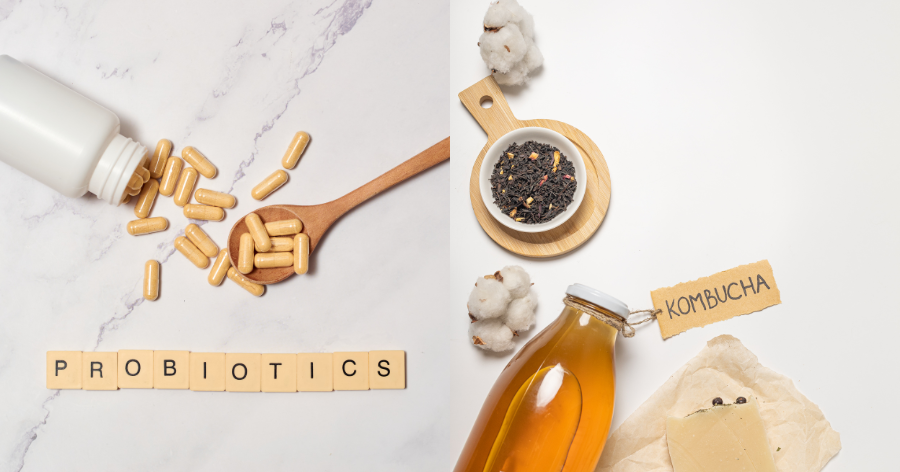
Kombucha vs. Probiotic Supplements: Which Delivers More Live Cultures?
Share
Kombucha vs. Probiotic Supplements: Why This Choice Matters
Probiotic supplements and kombucha both deliver live microbes, but they aren’t interchangeable. Pills are formulated to provide specific strains at labeled doses, while kombucha offers a naturally fermented mix of bacteria and yeast plus antioxidants from tea.
Knowing how they differ in CFU counts, strain diversity, survivability, practicality, and safety helps you pick what actually serves your goals.
Firewalker Beverages has all the mouthwatering kombucha flavors you want! Shop now.
How Many Live Cultures Do You Actually Get?
Most reputable probiotic products aim for at least 1 billion CFU per dose and clearly list strains like Lactobacillus or Bifidobacterium so you know exactly what you’re taking.
The microbe load for kombucha is less standardized: a 2023–2024 human trial and lab analyses report roughly one million viable organisms per mL, meaning a typical 8‑oz serving still delivers hundreds of millions of cells—but the mix of species varies widely by brand and batch.
Do Those Microbes Survive Your Stomach?
Enteric coatings and time‑release technologies can help supplement strains reach the intestine still intact.
Kombucha’s own acidic pH and polyphenols may offer some protection, but direct head‑to‑head human data on survival rates are scarce, and the overall evidence base for kombucha’s clinical effects remains limited.
Get your daily dose of probiotics without sacrificing flavor. Buy Blackberry Sangria kombucha here.
Which One Should You Choose?
If you need a targeted, clinically studied strain (for example, after antibiotics), a vetted supplement is the predictable route. If you’re simply looking to add some live cultures and antioxidants while replacing soda with something tangy and lower in sugar, a daily bottle of kombucha can fit the bill.
Either way, your gut thrives most on a fiber‑rich, plant‑forward diet that feeds those microbes once they arrive.
FAQs
How much kombucha is safe to drink daily?
The CDC suggests starting around 4 oz (118 mL) per day and increasing gradually if you tolerate it well. Most healthy adults stick to 8–12 oz daily.
Does kombucha have more probiotics than a pill?
Usually not. Many supplements guarantee 1–10 billion CFU per dose, while kombucha typically delivers millions to low billions.
Can I take probiotic pills and drink kombucha together?
Yes—there’s no evidence they “cancel each other out.” Just watch for GI discomfort if you suddenly increase total live‑culture intake.
Will the microbes in kombucha survive stomach acid?
Some will, thanks to acidic pH and polyphenols in kombucha, but survival is less controlled than with enteric‑coated capsules designed for GI delivery.
Are probiotic supplements regulated?
In the U.S., probiotics are sold as dietary supplements, so they’re not FDA‑approved like drugs. Look for third‑party testing seals (USP, NSF) and clearly listed strains.
What’s the best overall gut‑health strategy?
No product beats a fiber‑rich, plant‑forward diet. Use kombucha or supplements as add‑ons, not replacements, for fermented foods and prebiotic fibers.
Are you looking for a kombucha flavor that’s fresh and unique? Take a look at Blueberry Crumble.
Sources
Mayo Clinic – “Kombucha tea: Does it have health benefits?”
Cleveland Clinic – “How To Pick the Best Probiotic for You”
PubMed – “Kombucha tea as an anti-hyperglycemic agent in humans with type 2 diabetes”
ScienceDirect – “Biochemical and microbiological impacts on the chemical and flavor profile of kombucha”
Cleveland Clinic – “Kombucha: What Is It and 7 Benefits”
PubMed – “Kombucha: a systematic review of the empirical evidence of human health benefits”